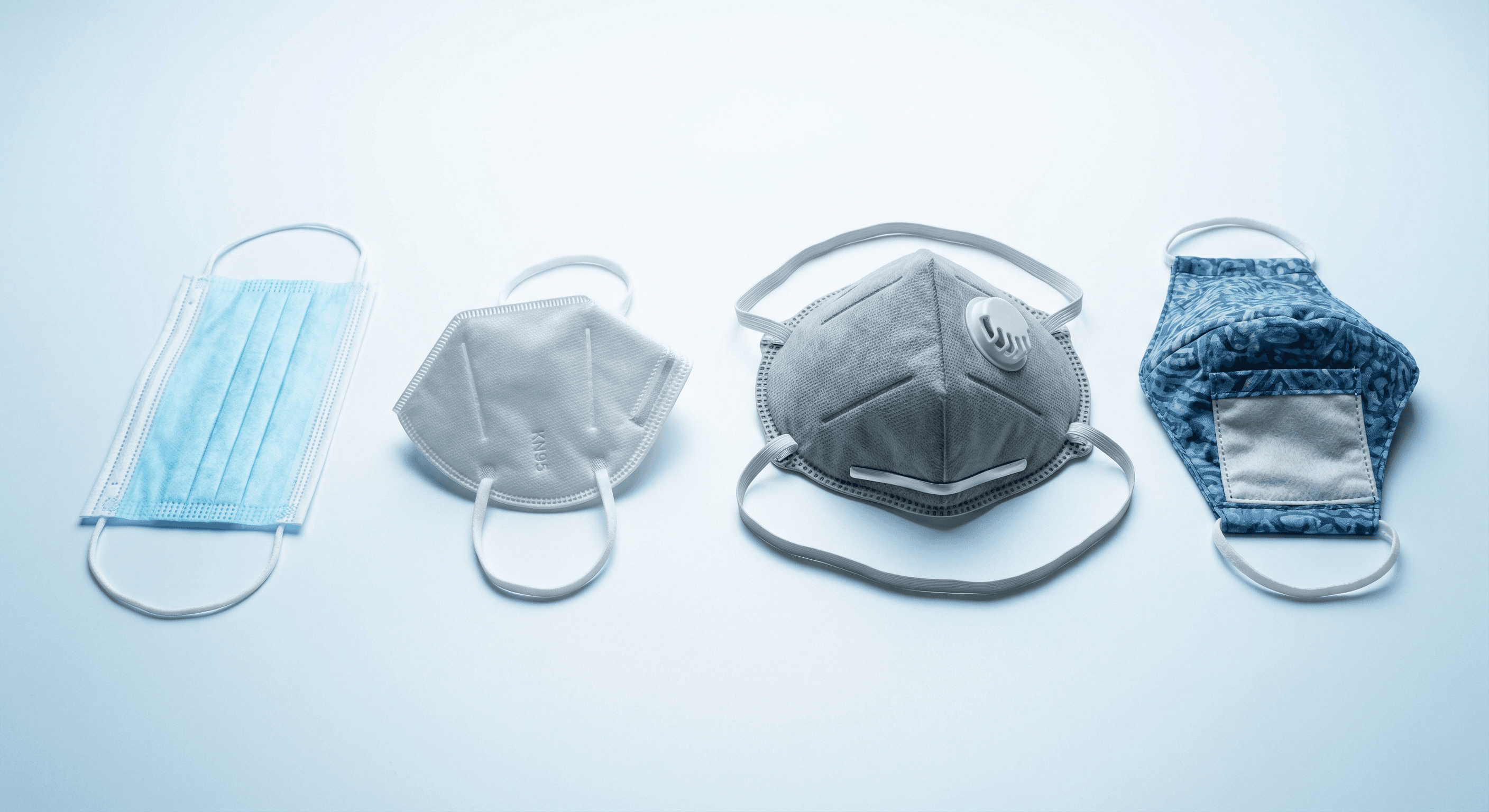
Face Mask Types Overview
The global market offers several types of face masks, each designed for different levels of protection. Understanding these differences is crucial for making the right sourcing decision.
3-Ply Disposable Face Mask
The most widely used mask type, consisting of three layers:
- Outer layer — fluid-repellent non-woven fabric
- Middle layer — melt-blown filter media (the key filtration layer)
- Inner layer — soft, moisture-absorbing non-woven fabric
KN95 / FFP2 Respirator
Higher-grade respiratory protection with form-fitting design:
- Filtration efficiency ≥ 94-95% for particles ≥ 0.3μm
- Tight facial seal reduces unfiltered air leakage
- Multiple layers including activated carbon options
- Available with or without exhalation valve
Key Selection Factors
1. Protection Level Required
- Low risk (general public, food service) → 3-ply mask
- Medium risk (healthcare, dust exposure) → KN95/FFP2
- High risk (aerosol procedures) → N95/FFP3
2. Duration of Wear
- Short-duration use → 3-ply masks are comfortable and economical
- Extended wear → KN95 with adjustable nose clip and head straps
3. Regulatory Requirements
- Check local regulations for required mask standards
- Medical-use masks typically require specific certifications
4. Cost Considerations
- 3-ply masks: most economical for high-volume use
- KN95/FFP2: higher per-unit cost but better protection
Storage and Shelf Life
- Store in cool, dry place away from direct sunlight
- Typical shelf life: 2-3 years from manufacture date
- Check packaging integrity before use
Conclusion
Selecting the right face mask depends on your specific risk level, regulatory environment, and usage pattern. SAFEWELL offers both 3-ply and KN95/FFP2 masks with full certification support.